

Your cart is currently empty.
Why Are Some Dog Breeds More Prone to Periodontal Disease?
90% of dogs…
Periodontal disease is the most common disease diagnosed in dogs, and current research suggests that approximately 90% of dogs have some level of periodontal infection by just one year of age.¹²³⁴ While all dogs are susceptible, small and toy breeds are significantly more affected.⁵
Many people assume this is simply because small dogs have crowded teeth, shorter roots, and live longer. According to Board Certified Veterinary Dentist® Dr. Brook Niemiec, that is certainly part of the story, but not the whole explanation:
“I would say all that is true, but the main reason is genetics.”
Research and clinical experience show that certain breeds appear genetically predisposed to developing more severe periodontal disease, even when compared with dogs of similar size. Breeds commonly identified as higher risk include:
- Miniature Schnauzers²
- Toy and Miniature Poodles
- Yorkshire Terriers
-
Chihuahuas⁶
- Maltese
- Pomeranians
- Cavalier King Charles Spaniels
-
Shih Tzus⁷
-
Pekingese
-
Greyhounds⁸
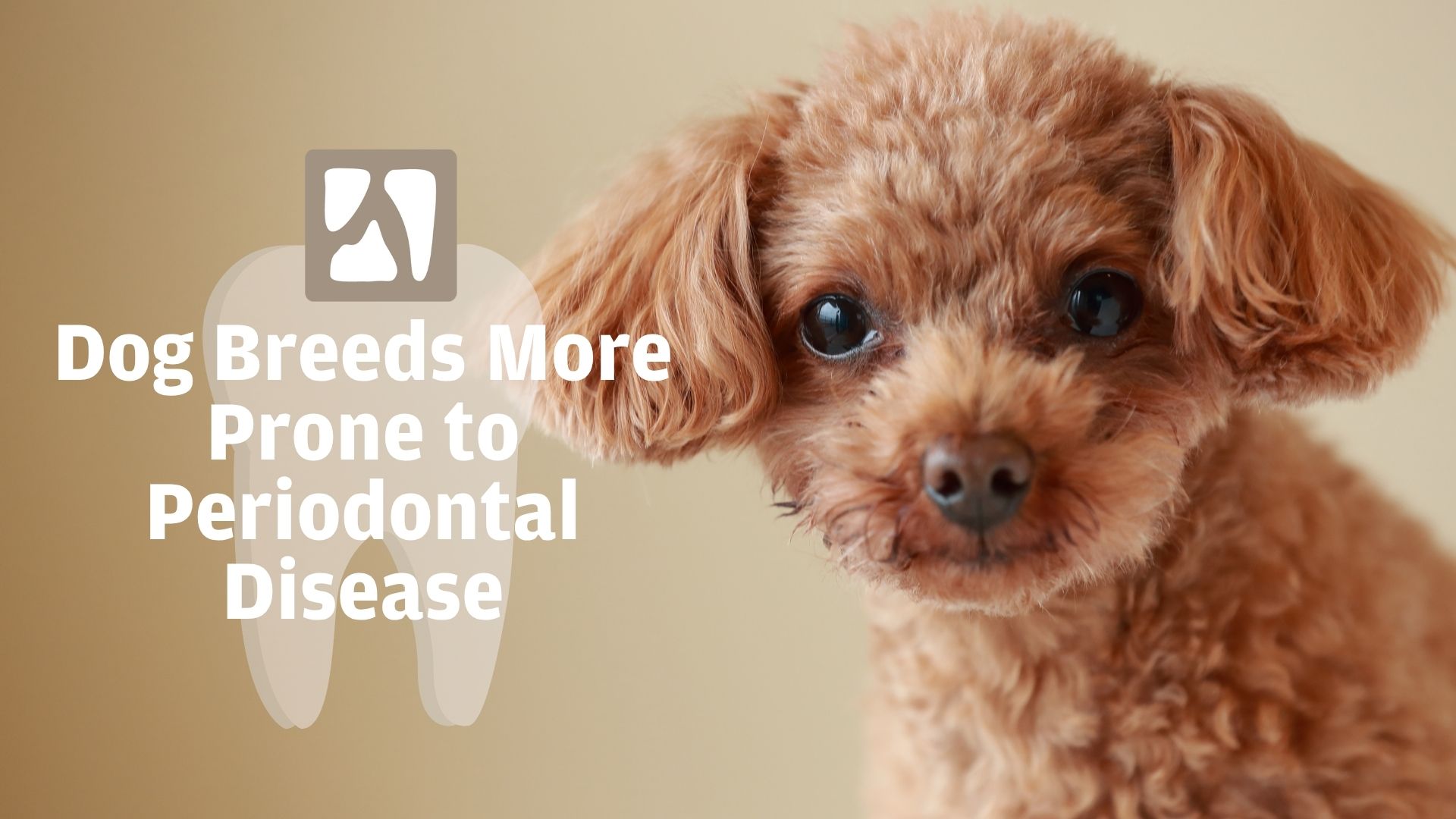
While crowded teeth, retained baby teeth, and brachycephalic anatomy can increase plaque accumulation, genetics likely influence how a dog’s immune system responds to oral bacteria and inflammation. This helps explain why some dogs develop advanced bone loss and infection at a young age while others maintain relatively healthy mouths despite similar levels of plaque and calculus.
The good news is that early detection and preventive care can dramatically reduce the impact of periodontal disease. Regular dental examinations, dental radiographs, professional cleanings, and home care are especially important for breeds known to be at higher risk.
References
- Fernandes NA, Batista Borges AP, Carlo Reis EC, Sepúlveda RV, de Sousa Pontes KC. Prevalence of periodontal disease in dogs and owners’ level of awareness – a prospective clinical trial. Rev Ceres Viçosa 2012;59(4):446-451.
- Marshall, M.D., Wallis, C.V., Milella, L., et al. (2014) A longitudinal assessment of periodontal disease in 52 Miniature Schnauzers. BMC Veterinary Research. 10, 166.
- Queck, K.E., Chapman, A., Herzog, L.J., et al. (2018) Oral-Fluid Thiol-Detection Test Identifies Underlying Active Periodontal Disease Not Detected by the Visual Awake Examination. Journal of the American Animal Hospital Association. 54, 132-137.
- Stella, J. L., Bauer, A. E. & Croney, C. C. (2018) A cross-sectional study to estimate prevalence of periodontal disease in a population of dogs (Canis familiaris) in commercial breeding facilities in Indiana and Illinois. PLoS One 13, e0191395.
- Hoffmann TH, Gaengler P: Clinical and pathomorphological investigation of spontaneously occurring periodontal disease in dogs. J Small Anim Pract. 37: 471-9, 1996.
- O’Neill DG, Packer RMA, Lobb M, Church DB, Brodbelt DC, Pegram C. Demography and commonly recorded clinical conditions of Chihuahuas under primary veterinary care in the UK in 2016. BMC Vet Res. 2020 Feb 12;16(1):42.
- Dale F, Brodbelt DC, West G, Church DB, Lee YH, O’Neill DG. Demography, common disorders and mortality of Shih Tzu dogs under primary veterinary care in the UK. Canine Med Genet. 2024 Jan 24;11(1):2
- Rooney NJ, Wonham KL, McIndoe KS, Casey RA, Blackwell EJ, Browne WJ. Weekly and Daily Tooth Brushing by Care Staff Reduces Gingivitis and Calculus in Racing Greyhounds. Animals (Basel). 2021 Jun 23;11(7):1869
Read More
Breed Dispositions to Dental and Oral Disease in Dogs
This book will describe the significant differences between large and small breed patients in regards to onset, prevalence, and significant local/regional and systemic consequences of periodontal disease. This necessitates a completely different approach to periodontal therapy as well as a reevaluation as to decisions on when and how to extract teeth. We will also cover the other breeds who are prone to particular dental issues and how to mitigate them. In addition, we will briefly cover the unique concerns of brachycephalic breeds. The challenges of extractions in small and toy breed dogs is presented to help avoid iatrogenic complications. Finally, this book will debunk the common myths of anesthetic risks in brachycephalic and especially small breed dogs.